
Check Sockets: Plaster or 3D Printing?
Switching to a digital workflow doesn't mean discarding your expertise. Practically speaking, it's about understanding how this method impacts your workshop, what habits you'll keep, and how to integrate it without disrupting everything.

The role of a check socket
The goal of a check socket remains unchanged: validating the socket shape, suspension, and alignment before committing to the definitive socket. The real difference between the two methods happens in the O&P lab, in the material's behavior, and during the transition to carbon fiber lamination.
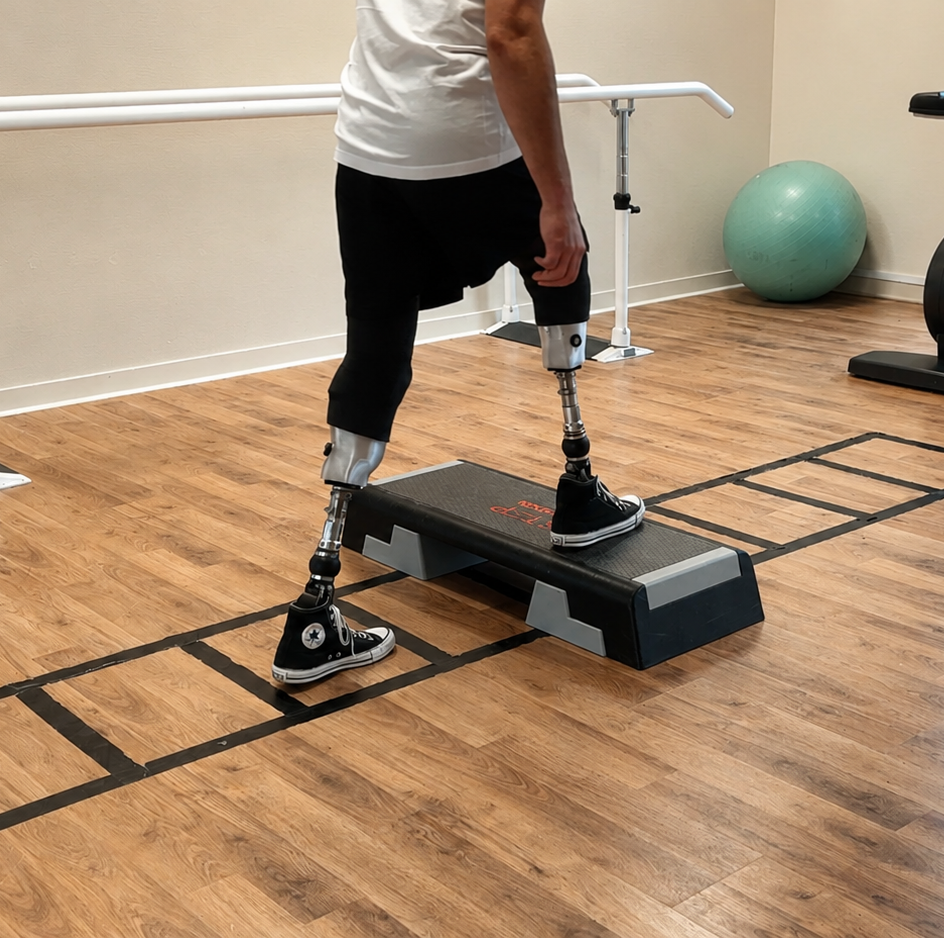
Fabrication Time & Workflow
Plaster Method: Casting, setting time, stripping the cast, positive model modification, and thermoforming. Between prep and clean-up, it easily monopolizes half a day of workshop time.
Digital Method: A quick scan and CAD modification on screen. The machine handles the rest. Through the VYTRUVE central fabrication facility, the socket arrives within 48 to 72 hours. With an in-house 3D printer, a print started in the evening is ready for the diagnostic fitting the next morning.
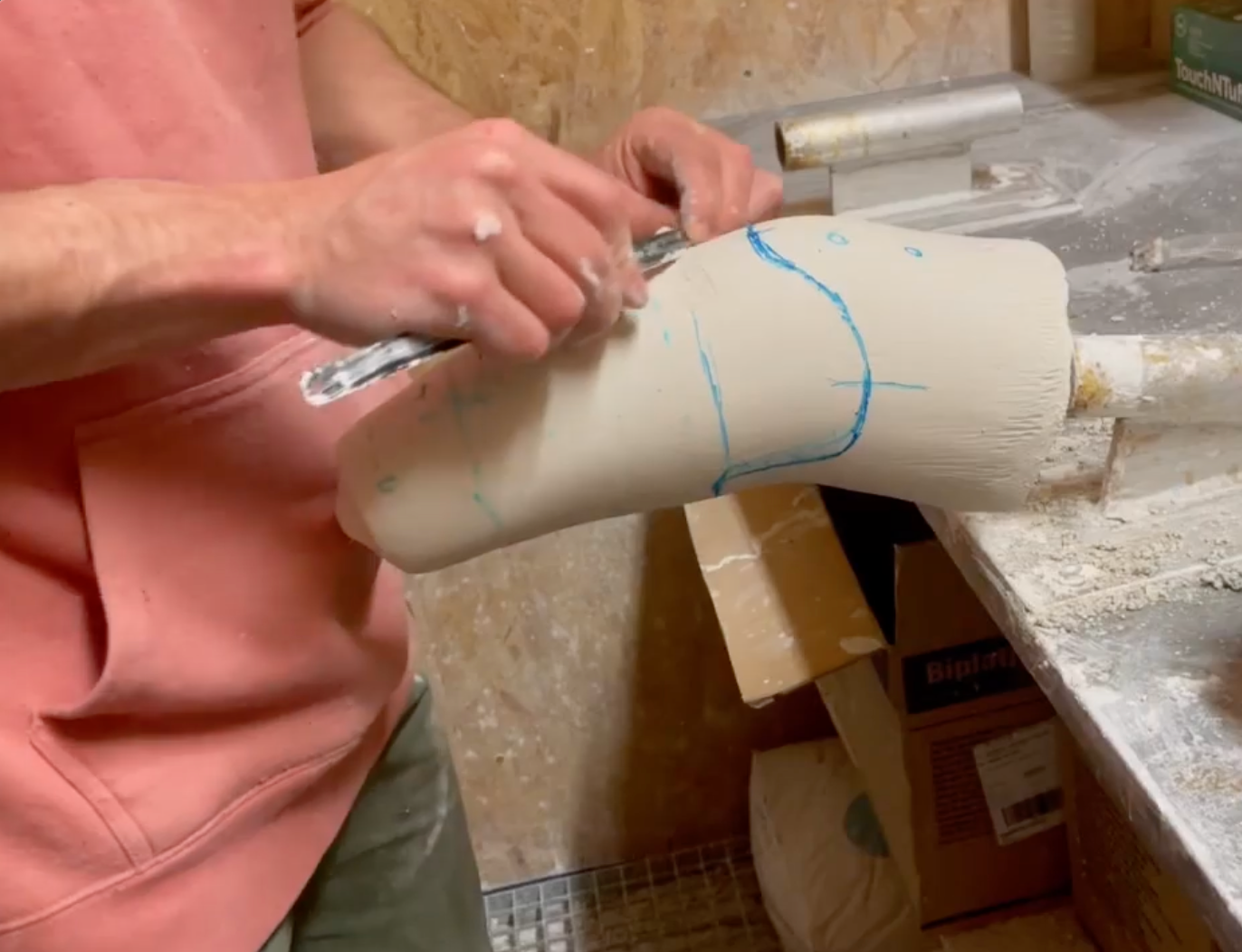
Rectification with the traditional method with plaster
Materials & Clinical Fitting
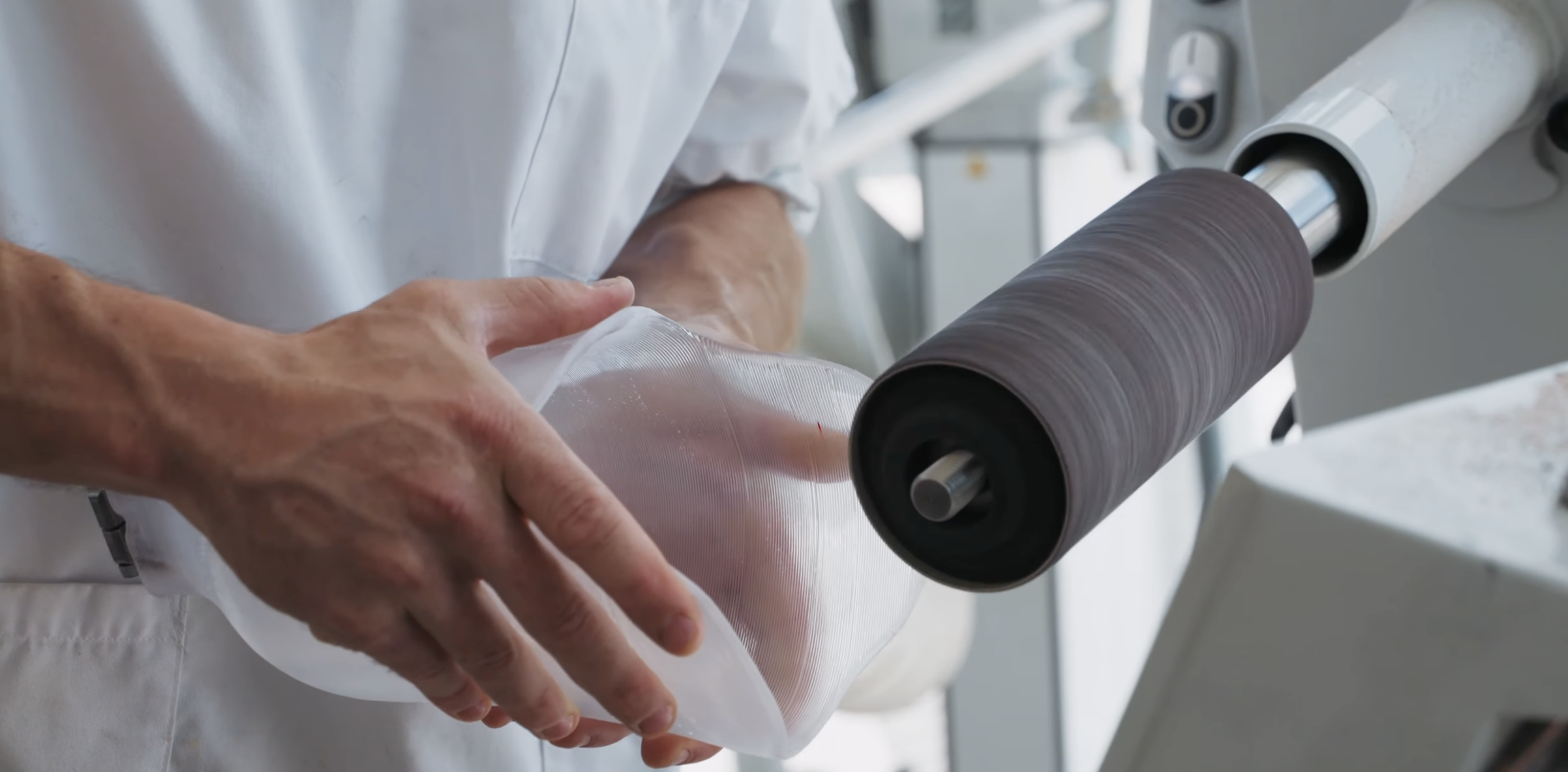
Plaster (PP/PE): Standard thermoforming. Clear versions are available to visually evaluate skin contact and pressure distribution.
3D (PETG via FDM): The printer replicates your modified model layer by layer. PETG offers better impact resistance than standard polypropylene and a stiffness closer to a definitive socket. The patient's feedback during the fitting is therefore much more representative of the prosthesis's final behavior.
Fitting Adjustments: Both materials react to heat in the same way. If an adjustment is needed during the clinical fitting, PETG can be easily modified with a heat gun, exactly like standard thermoplastics.
Accuracy & Modification Tracking
With plaster, accuracy relies on hand skills: each step (pouring, carving, thermoforming) introduces a margin of interpretation.
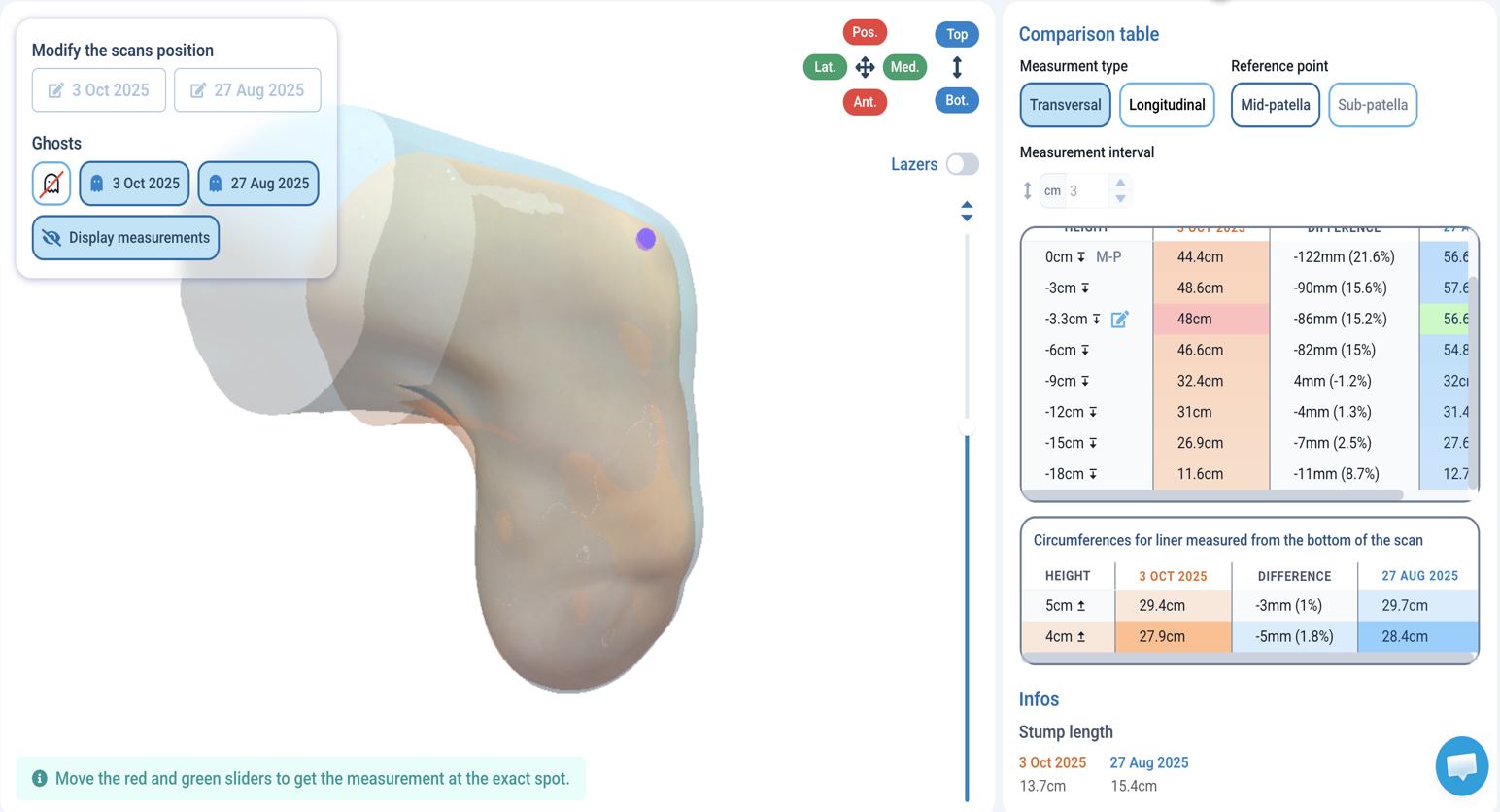
In the digital workflow, the rule is simple: a good scan provides a precise baseline; a poor scan yields a poor modification. However, 3D printing brings true consistency. If you need to manufacture a new socket after a fitting, you never start from a raw positive model again. The software gives you 3 clear options:
Start over from the original scan for a new approach.
Reopen your last CAD modification and apply corrections directly (a massive time-saver).
Reprint an identical socket.
From Check Socket to Definitive: The Transition to Carbon
This is where the digital workflow really pulls ahead. In a traditional process, you pour a plaster positive inside the check socket to prepare for lamination. The dynamic alignment validated with the patient must be transferred manually, and during this fabrication process, the patient is left without their prosthesis.
With the Vtransfer process:
You scan the validated check socket directly on its transfer plate.
The system captures the exact internal volume and the dynamic alignment.
VYTRUVE generates a PETG positive model and an alignment guide featuring the plate's position to replicate the alignment perfectly during lamination.
In the workshop: No wet plaster, no oven time, no plaster positive to chip away with a chisel.
Patient result: They get to keep their check socket throughout the fabrication of the definitive prosthesis.


Costs & Materials
Plaster: Low material cost, but high labor cost (Prosthetist/Technician time) and waste generation (thermoplastic scraps, discarded plaster).
3D Printing: Zero waste; you use material down to the gram. A transtibial check socket through VYTRUVE's central fabrication starts at €150 (excluding shipping). With an in-house Vprint, the unit cost drops significantly, effectively reducing to just the price of the filament spool.
Summary
3D printing provides measurable benefits in fabrication time, consistency, and streamlines the transition to the definitive socket. Today, most prosthetists who adopt this method ultimately make it their standard daily fabrication workflow.
VYTRUVE is accessible at app.vytruve.com.
For questions or a demonstration, contact l.eckenfelder@vytruve.com or reach us at contact@vytruve.com.
Tags: 3D printed check socket, prosthetic fitting, CPO digital workflow, PETG socket, plaster vs digital, VYTRUVE
VYTRUVE SCANNING HARDWARE
Vcart
Digitalizer
BK / upper limb scanning tools
AK scanning tools
KEY FEATURES
OF VYTRUVE
Scan comparison
Alignment
O&P components integration
100% color
VYTRUVE
3D-PRINTING
Vprint
Digitalizer
Service
O&P
Products
TT / TF Check sockets
Temp orthosis
Definitive TT / TF
Definitive TR
3D-Custom liners